How does ChatGPT decide which businesses to recommend?
It reads what is already online and picks the businesses that are described clearly and vouched for by other people. There is no directory behind the curtain and no form to fill in. When someone types who should I use for a loft conversion in Bradford, the tool looks for pages that say, in ordinary words, that a firm does loft conversions in Bradford, then looks for reasons to believe it: reviews, photographs of finished jobs, mentions on other websites, a Google profile that matches.
Four things carry most of the weight. A website that states the service and the place plainly. A Google Business Profile that agrees with the website. Reviews that mention the actual work. And other sites, from the local paper to a suppliers’ directory, that name the business.
Does ChatGPT even know my business exists?
Only if it has read about you somewhere it can reach, and for a lot of Bradford trades that is the whole problem. A site with three pages, a logo and a phone number tells the tool almost nothing. A Facebook page it cannot read does not count. Nor does a lovely video with the important facts spoken aloud but written nowhere.
Test it yourself. Ask ChatGPT what it knows about your business by name. If the answer is vague, wrong or a polite version of nothing, you have found the starting point.
Why does it recommend my competitor and leave me out?
Because your competitor is easier to read and better vouched for, and that is nearly always the whole story. Open their website and count the pages: there is probably one for each service and one for each area, each saying what the job is and where they have done it. Look at their Google profile, their review count, the detail in those reviews. Search their name and see how many other websites mention them.
None of that is clever. It is the boring work of being described properly, done more often than you have done it. Which means it can be caught up.
What can I change this month?
Start with the words on your homepage. In the first line, say what you do, who for and where, using the words a customer would use: gas engineer in Bradford, not heating solutions. Then give each service its own page, even a short one, with a photograph of a real job and the area it was in.
Claim and fill in the Google Business Profile so the name, phone number and services match the website exactly. Ask the last five customers for a review and suggest they mention the job and the town. And put your finished projects on the site with names and places, because a project with a name and a place, the way Jack Lunn’s Flower Meadows development is filmed and named, tells an AI tool far more than a paragraph about quality.
- Say the service and the place in your first line
- One page per service, with a real photograph
- A Google profile that matches the website word for word
- Five recent reviews that mention the job
- Projects named and placed on the site
What does Halizona do about it?
We find out what the AI tools say about you now, fix the reasons they give for leaving you out, and measure again until the answer changes. That starts with the wording and structure of the website, moves on to the Google profile and the reviews, and then to the evidence: filmed projects, photographed jobs, written-up case studies and mentions on other sites.
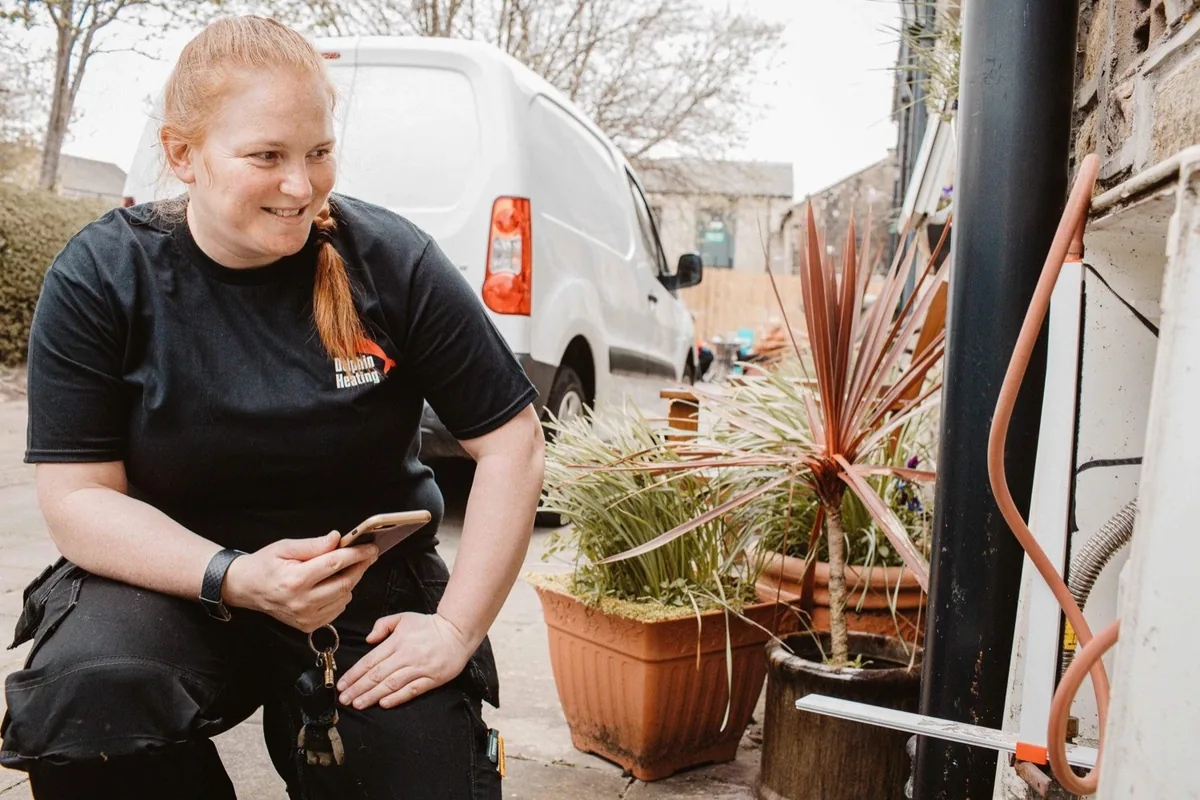
Dolphin Heating in Huddersfield is the plain example. Fay is a Gas Safe engineer with one van, and a lot of her customers want a female gas engineer specifically. We built the website around that exact phrase, and she is now first on Google for it and named in the AI answer. The same approach works for a Bradford roofer, a joiner or a commercial cleaning firm, because the tools are asking the same question of everyone.