Why isn’t my business showing on Google Maps?
One of four things, nearly every time. There is no Google Business Profile, or one was started and never verified, so Google does not trust it. The category is wrong, so a search for a plumber finds a profile filed under home services. The address or service area is set up wrongly for the kind of business it is. Or the profile is empty: no photographs, no services, no reviews, no posts, nothing since the day it was made.
A fifth cause catches out the busy ones. The website, the profile and the directories all say slightly different things about the name, the phone number or the address, and Google quietly loses confidence in all of them.
Does Google Maps matter for AI search?
Yes, more than most people expect. When Google’s AI Overview answers a local question, the businesses it lists are drawn from the same profiles that feed the map. ChatGPT and the others check business listings and reviews to confirm that a firm exists, where it works and what customers say. A profile that is missing, unverified or empty removes that evidence, and the tool moves on to a firm that has it.
Put simply, the map listing is your business record as far as the AI tools are concerned. If the record is thin, so is the answer.
Can a business that works from a van still be on the map?
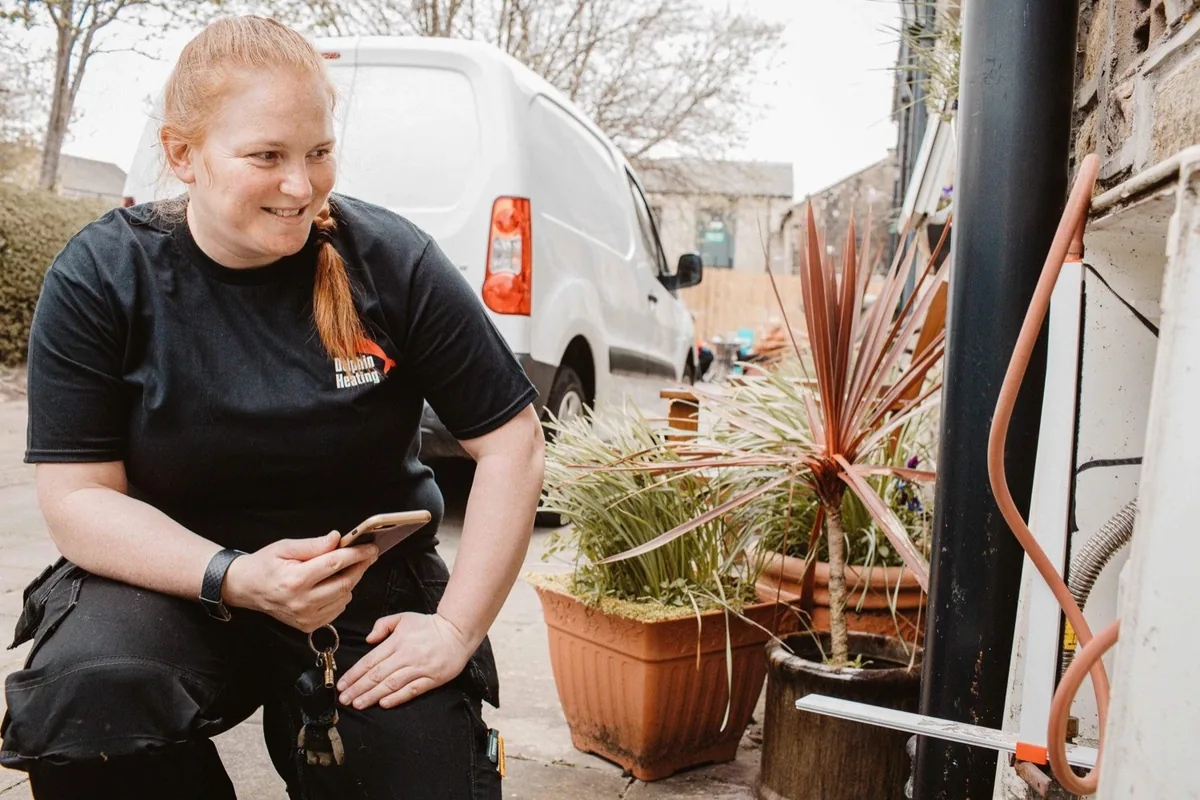
Yes. Google calls that a service-area business: you hide the street address, list the areas you cover, Bradford, Shipley, Bingley, Keighley and so on, and the profile shows for searches in those places. Plenty of the best local profiles belong to one-van firms. Dolphin Heating is one engineer and one van in Huddersfield, and it is first on Google for the search that matters most to it.
What you cannot do is borrow an address, use a mate’s unit or list a place you do not actually work from. Google removes those profiles, and it is slow to forgive.
What should the profile actually contain?
Everything a customer would want to know before ringing, in the words they would use. The right main category and the secondary ones that fit. Each service named the way people search for it. The areas covered. Opening hours that are true. Photographs of real jobs, vans and people, added regularly. A link to the matching page on the website. Answers to the questions people ask. And reviews, asked for after every job, with a gentle nudge to mention the work and the place.
- The right category, plus the secondary ones that fit
- Services named as customers say them
- The areas you actually cover
- Real photographs of jobs, added often
- Reviews that mention the job and the town
- A link to the page on your site that says the same thing
How do the map, the website and the AI answer fit together?
They have to agree, and each one backs up the other two. The profile says what you do and where, the website says the same thing in more detail with pages and photographs to prove it, and the reviews say customers were happy with exactly that work. An AI tool reading all three finds the same story told three ways and takes it as true.
Where they disagree, the tool has to guess, and it usually guesses in favour of the firm whose story is straight.
What does Halizona do here?
We check the profile against the website and the directories, fix the category, the areas and the mismatches, and fill in what is missing. Then we set up a simple routine for photographs and reviews, so the profile keeps looking alive, and we measure both the map position and the AI mentions month by month.
For a Bradford business the map is usually the quickest win of all of this, because most of the competition has never finished setting theirs up.